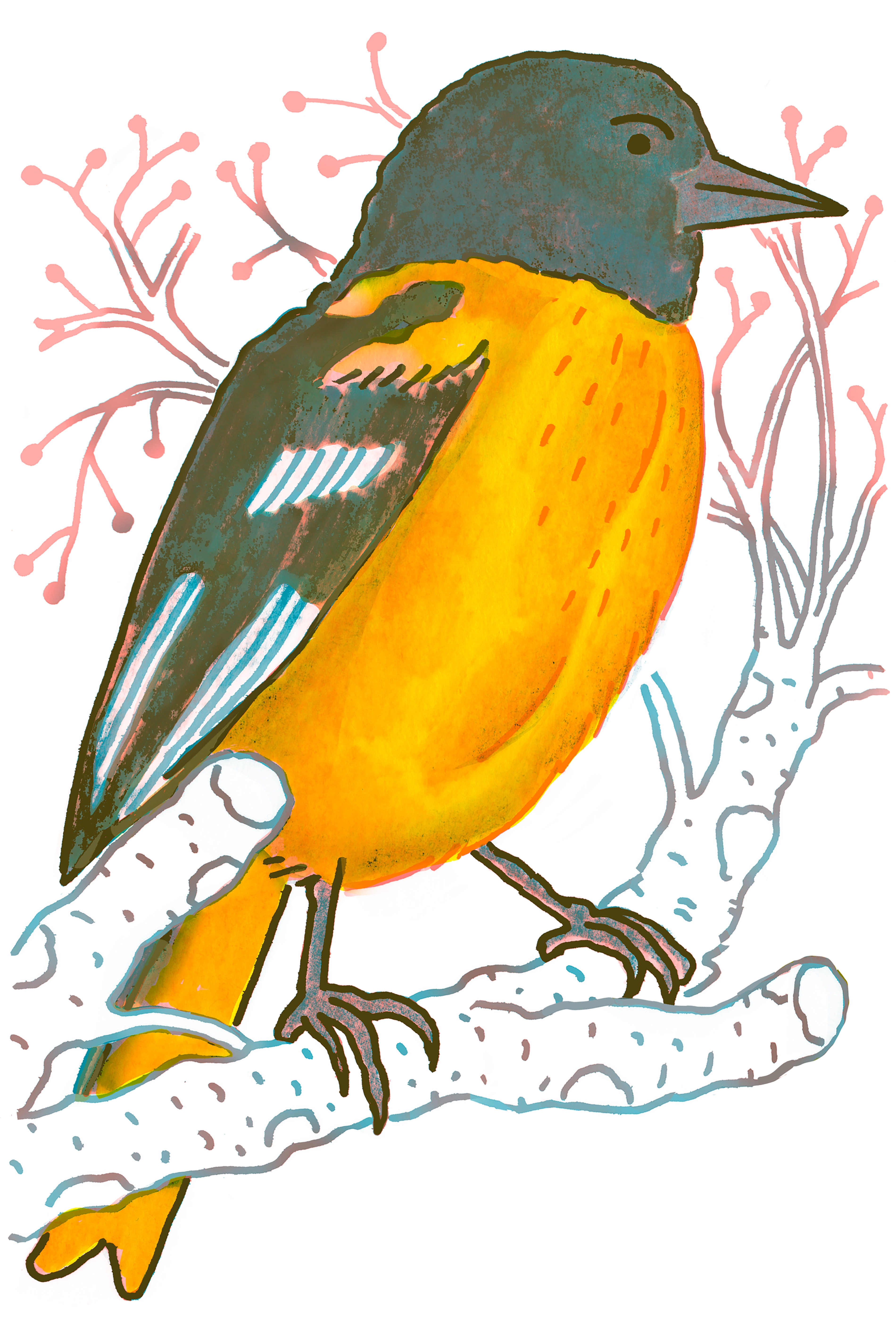
Baltimore Oriole
Icterus galbula Apr–Oct
The cheerful clear notes coming from the treetops during the spring and summer may indicate this bird is near. Look for a bright flash of orange peeking out among the leaves. Their appearance is a welcome sight and indicates the coming of spring, as they travel north to breed from their wintering grounds in Florida, the Caribbean, Central America, and portions of South America. Preferring to shelter in trees along the edges of forests and open areas rather than dense woods, these birds feed on berries, nectar, and insects. When it comes to fruit, it picks out the ones with the darkest color and can also be found at backyard feeders with treats such as orange slices and grape jelly. The female builds a remarkable nest resembling a woven pouch, where the opening is attached to a branch. This nest is made up of plant fibers, vines and other found materials such as yarn, twine and even discarded fishing line.
It is estimated by the NABCI (North American Bird Conservation Initiative) that 44% of Baltimore Orioles have disappeared since 1970. This is mainly due to a combination of habitat loss and pesticides use, which kills the insects they need as a food source. These birds also prefer to nest in elm trees, which in the US have been affected by Dutch elm disease. Since they spend the colder months in Central and South America, deforestation in these areas also have a detrimental impact.